

BTech in Computer Science & Engineering - Overview
Program Description
The B.Tech. in Computer Science and Engineering (CSE) program focuses on the scientific and technological foundations required to design, develop, and deploy computing systems and software applications. The program emphasizes the application of mathematics, logical reasoning, and computing principles to solve complex engineering and real-world problems.
The curriculum is continuously updated to reflect rapid technological advancements and includes emerging domains such as Artificial Intelligence, Machine Learning, Big Data Analytics, Cryptography, Internet of Things (IoT), High-Performance Computing, and Cloud Technologies. Along with a strong theoretical foundation, the program encourages hands-on learning, industry exposure, and lifelong skill development.
Students are also provided flexibility to enhance their learning through online certification platforms such as NPTEL, SWAYAM, and Coursera, enabling them to stay aligned with global industry standards. Graduates of the program are well-prepared to contribute across diverse sectors including software development, healthcare, communications, manufacturing, automotive, finance, and government services.
Specializations Offered
Students may opt for one of the following specializations based on their academic performance (CGPA) at the end of the second year. The choice of specialization is exercised at the beginning of the third year.
Artificial Intelligence and Machine Learning
Networks and Internet of Things (IoT)
Data Science
Software Engineering
Cyber Security
Gamification and Digital Twinning
Robotics and Artificial Intelligence
Each specialization enables in-depth exploration of domain-specific technologies while maintaining a strong core in computer science, allowing students to gain both breadth and depth in CSE.
Course Structure for 2026 B.Tech Computer Science and Engineering
Course structure_CSE-2026 admission.pdf
Dual Degree Programs
1. MIT–Monash University Dual Degree Program (Computer Science and Engineering)
Students enrolled in this program study the first two years of the BTech in Computer Science and Engineering at MIT Manipal before progressing to Monash University, Australia, where they complete the final two years of the Bachelor of Engineering (Honours) in Software Engineering. At the end of four years, graduates receive two degrees: a BTech from MIT Manipal and a Bachelor of Engineering (Honours) from Monash University, preparing them for global careers in computing and software development.
2. MIT–Australian National University Dual Degree Program (Computer Science and Engineering)
Under this pathway, students complete the first two years of the BTech in Computer Science and Engineering at MIT Manipal, followed by two years at the Australian National University, Australia, where they pursue the Bachelor of Engineering (Honours) in Software Engineering. Successful graduates receive two undergraduate degrees at the end of four years, reflecting academic training from both institutions.
Program Focus
Computer Science and Engineering (CSE) is a rapidly evolving discipline that integrates principles of mathematics, logic, and engineering to design, develop, and analyze computing systems and intelligent software solutions. The program emphasizes both theoretical foundations and practical skills to address complex real-world challenges through computation. The CSE curriculum builds strong fundamentals in programming, data structures, algorithms, computer organization, operating systems, databases, computer networks, software engineering, and theory of computation. These core areas provide a solid base for advanced learning and innovation. The program offers exposure to diverse professional and emerging fields such as software engineering, artificial intelligence and machine learning, data science and analytics, cybersecurity, cloud computing, Internet of Things (IoT), big data technologies, computer vision, and distributed systems. Students are encouraged to engage in interdisciplinary learning, research, and industry-oriented projects. Computer science and engineering graduates find opportunities across multiple sectors including information technology, healthcare, finance, manufacturing, education, and government. By developing intelligent, secure, and scalable digital solutions, CSE professionals play a crucial role in driving technological innovation and supporting the digital transformation of modern society.
Career Prospects
Computer Science graduates have excellent career prospects across a wide range of industries due to the increasing dependence on digital technologies. Graduates can pursue careers as software engineers, system analysts, web and mobile application developers, database administrators, and network engineers. With the rapid growth of data-driven technologies, roles such as data scientists, machine learning engineers, artificial intelligence specialists, and business analysts are in high demand.
Opportunities also exist in cybersecurity as information security analysts, ethical hackers, and cyber-forensic experts, as well as in cloud computing and DevOps engineering. Graduates may find employment in sectors including information technology, healthcare, finance, manufacturing, e-commerce, telecommunications, education, and government organizations.
In addition to industry roles, computer science graduates can pursue higher studies and research, leading to careers in academia and innovation. Entrepreneurship, startups, and freelance consulting also offer promising career paths. With continuous learning and skill development, computer science professionals play a vital role in driving digital transformation and technological advancement worldwide.
Vision and Mission
Vision:
“Excellence in Computer Science & Engineering education through continuous learning, research and teamwork.”
Mission:
To impart excellent Computer Science & Engineering education for professional roles in a changing and challenging technological world, to advance knowledge through quality research in important emerging areas in the discipline, and to build a strong relationship with industry, academia, and society.
PROGRAM EDUCATIONAL OBJECTIVES (PEO)
PEO1: Carry out engineering projects and develop new products in the area of Computer Science and Engineering and pursue higher studies.
PEO2: Innovate and be creative in the profession; apply analytical skills and demonstrate research capabilities in the field of computer science and engineering.
PEO3: Work in multidisciplinary environments and be responsive to the changing needs of the society.
PEO4: Communicate effectively, display leadership skills, and demonstrate professionalism.
PEO5: Engage in lifelong learning, apply the knowledge judiciously and remain continuously employable.
PROGRAM SPECIFIC OUTCOMES(PSO)
PSO1: Apply fundamental knowledge of algorithms, data structures, programming languages and computer architecture, to design, develop and analyze efficient computing solutions
PSO2: Demonstrate the ability to design, develop and maintain software systems by leveraging concepts of operating systems, databases and software engineering practices for solving complex problems.
PSO3: Design innovative, intelligent, secure and scalable solutions using emerging technologies such as Computer networking and IoT, Artificial Intelligence and Machine Learning, Cyber Security and Data Science
PROGRAM OUTCOMES(PO)
Computer Engineering Graduates will be able to:
PO1: Engineering knowledge: Apply the knowledge of mathematics, science, engineering fundamentals, and an engineering specialization to the solution of complex engineering problems.
PO2: Problem analysis: Identify, formulate, review research literature, and analyze complex engineering problems reaching substantiated conclusions using first principles of mathematics, natural sciences, and engineering sciences.
PO3: Design/development of solutions: Design solutions for complex engineering problems and design system components or processes that meet the specified needs with appropriate consideration for the public health and safety, and the cultural, societal, and environmental considerations.
PO4: Conduct investigations of complex problems: Use research-based knowledge and research methods including design of experiments, analysis and interpretation of data, and synthesis of the information to provide valid conclusions.
PO5:Modern tool usage: Create, select, and apply appropriate techniques, resources, and modern engineering and IT tools including prediction and modeling to complex engineering activities with an understanding of the limitations.
PO6:The Engineer and The World: Analyze and evaluate societal and environmental aspect while solving complex engineering problems for its impact on sustainability with reference to economy, health, safety, legal framework, culture and environment.
PO7:Ethics: Apply ethical principles and commit to professional ethics and responsibilities and norms of the engineering practice.
PO8:Individual and team work: Function effectively as an individual, and as a member or leader in diverse teams, and in multidisciplinary settings.
PO9: Communication: Communicate effectively on complex engineering activities with the engineering community and with society at large, such as, being able to comprehend and write effective reports and design documentation, make effective presentations, and give and receive clear instructions.
PO10: Project management and finance: Demonstrate knowledge and understanding of the engineering and management principles and apply these to one’s own work, as a member and leader in a team, to manage projects and in multidisciplinary environments.
PO11: Life-long learning: Recognize the need for, and have the preparation and ability to engage in independent and life-long learning in the broadest context of technological change.
Academic and Industry Collaborations
University Collaborations :
- State University of New York, Binghamton, USA: Facilitating a 3.5+1.5 Year program, offering flexibility, a rigorous curriculum, international exposure, and building institutional relations.
- Chosun University: Collaborating on practical research in biometrics for healthcare and access control, sharing funding, publications, researchers, and academic materials.
- Monash University: Offers Dual Degree Programs. Students enrolled in this program study the first two years of the BTech in Computer Science and Engineering at MIT Manipal before progressing to Monash University, Australia, where they complete the final two years of the Bachelor of Engineering (Honours) in Software Engineering. At the end of four years, graduates receive two degrees: a BTech from MIT Manipal and a Bachelor of Engineering (Honours) from Monash University, preparing them for global careers in computing and software development.
- Australian National University : Offers Dual Degree Programs. Under this pathway, students complete the first two years of the BTech in Computer Science and Engineering at MIT Manipal, followed by two years at the Australian National University, Australia, where they pursue the Bachelor of Engineering (Honours) in Software Engineering. Successful graduates receive two undergraduate degrees at the end of four years, reflecting academic training from both institutions.
Industry Partnerships:
- Schneider Electric: Supporting PhD research, joint projects, and creating opportunities for student placements and faculty development in energy and technology.
- International Business Machines Corporation (IBM): Providing access to IBM's software resources for skill development and emphasizing practical cloud-based learning.
- Information Sharing and Analysis Center (ISAC), India: Establishing a Cyber Security Center of Excellence, fostering capacity building, joint ventures, and regional cooperation.
- DSCI Data Security Council of India: Strengthening expertise in data security through a strategic partnership.
- Cisco: Offering access to Cisco's educational materials, training, and discounted software, with marketing support for the Networking Academy program.
- Samsung: Collaborating on research projects and practical solutions.
- Thermax: Exploring joint research programs, academic/training activities, and opportunities for guest lectures, internships, and placements.
- Infosys Springboard Partnership: This collaboration enhances student employability and industry readiness by providing access to curated learning resources in emerging technologies, professional skills, and foundational computing concepts.
Placement Details
The school is well supported by the institute placement team. The placement team is headed by Associate Director (Industrial Liaison, Placement & Practice School) and oversees the entire placement process in the institution with the help of school coordinators. Students are provided with opportunities for Internships, Placements, Pre-placement offers (PPO) in core companies and ITES. Some of the major recruiters with a CTC of 10+ Lakhs for the department are Citrix R&D, Cloudera, Cohesity, DBOI Global Services, Goldman Sachs, Komprise India, Microsoft PPO, SAP Labs, VM Ware, Western Digital, etc. There are 90+ companies providing internship/placement/preplacement offers to our students.
Key Dates & Deadlines
30
Apr 30 26
Apr ' 26
Last date to Apply
'
Tentative Course Commencement Date
Indian Students Apply
Manipal Academy of Higher Education not only caters to one’s academic needs, but also lays emphasis on all-round development of its students.
International Students Apply
Manipal Academy of Higher Education not only caters to one’s academic needs, but also lays emphasis on all-round development of its students.
Indian Students Apply
Manipal Academy of Higher Education not only caters to one’s academic needs, but also lays emphasis on all-round development of its students.
International Students Apply
Manipal Academy of Higher Education not only caters to one’s academic needs, but also lays emphasis on all-round development of its students.
FAQs
The B.Tech. in Computer Science and Engineering (CSE) program is divided into 8 semesters (4 years). In the first 2 years, the B.Tech CSE syllabus semester-wise focuses on building a strong foundation in programming, data structures, algorithms, and computer organization, while also introducing operating systems, databases, computer networks and theory of computation.
At the end of the second year or fourth semester, students could opt for one of the following specializations:
- Robotics and Artificial Intelligence
- Cyber Security
- Artificial Intelligence and Machine Learning
- Data Science
- Software Engineering
- Gamification and Digital Twinning
- Networks and Internet of Things (IoT)
As for B.Tech CSE admission criteria, candidates should have:
- Passed in 10+2 or equivalent with Physics, Mathematics, and English as compulsory subjects.
- Studied Chemistry/ Biotechnology/ Biology, or any technical vocational subject as an optional subject from a recognized Indian board.
(NOTE: The technical vocational subject must be related to Computer, Civil, Chemical, Mechanical or Electrical streams.)
- Obtained a minimum of 50% aggregate marks together in Physics, Mathematics and any one of the optional subjects for admission based on Manipal Entrance Test (MET) rank. Or, a minimum of 75% aggregate marks scored together in Physics, Mathematics and any one of the optional subjects for admission based on JEE Mains Common Rank List.
The Manipal Institute of Technology (MIT), Manipal, has always been well-known for placing students into their preferred job roles. Every year, 300+ recruiting teams, including 50+ Fortune 500 companies, visit MIT Manipal to hire undergraduate and postgraduate candidates for campus placements and internships.
The prospects for placement after a B.Tech. in CSE or Computer Science and Engineering program are excellent. Graduates can take up high-demand careers as software engineers, data scientists, machine learning engineers, artificial intelligence specialists, cybersecurity analysts, and cloud computing engineers, among others.
The B.Tech CSE course duration is 4 years, spanning a total of 8 semesters.
The B.Tech Computer Science and Engineering fees’ structure is yearly, i.e. the fees must be paid in four annual installments. The total course fee is ₹24,42,000, inclusive of a refundable ‘caution deposit’ of ₹10,000 payable in the first year. For more details related to the yearly installment structure, please refer to this link.
At the beginning of the third year of the B.Tech. in Computer Science and Engineering (CSE) program, students can take up a specialization based on their academic performance. Each specialization allows students to gain in-depth knowledge of domain-specific technologies. Any one of the following specified in the B.Tech CSE specialization list below can be opted for:
Software Engineering
Gamification and Digital Twinning
Networks and Internet of Things (IoT)
Cyber Security
Artificial Intelligence and Machine Learning
Data Science
Robotics and Artificial Intelligence
There are numerous scholarship categories awarded by the Manipal Academy of Higher Education (MAHE), Manipal. Some of the scholarships available for B.Tech CSE students are as follows:
i) Harish and Bina Shah Foundation (HBSF) - MAHE EduEmpower Scholarship for B.Tech students at MIT Manipal.
ii) Scholarship for Meritorious Girl Students joining MIT Manipal
iii) Freeship, Scholar and Achiever Scholarship for B.Tech at MIT Manipal / Bengaluru Campus
iv) Merit Scholarships for Wards of Indian Military & Central Armed Police Forces (CAPF) (based on eligibility)
v) Merit Scholarships for International Students (based on eligibility)
vi) Merit Scholarship for Konkani Speaking Students (applicability subject to linguistic background)
vii) Merit Scholarship for Children of MAHE Manipal Alumni (based on eligibility)
viii) AICTE Tuition Fee Waiver (TFW)
For graduates of B.Tech CSE, career options are plentiful, including in government organizations and industries such as Information Technology, healthcare, finance, e-commerce, telecommunications, and education. Qualified individuals can pursue careers as software engineers, system analysts, web and mobile application developers, database administrators, data scientists, machine learning engineers, AI specialists and cybersecurity professionals, among others.
Computer Science Engineering Course Duration
4 Years (8 semesters).


Facilties
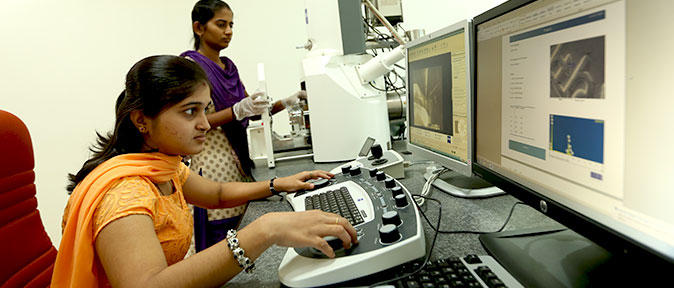
Laboratories
World-class laboratories give learning a practical dimension
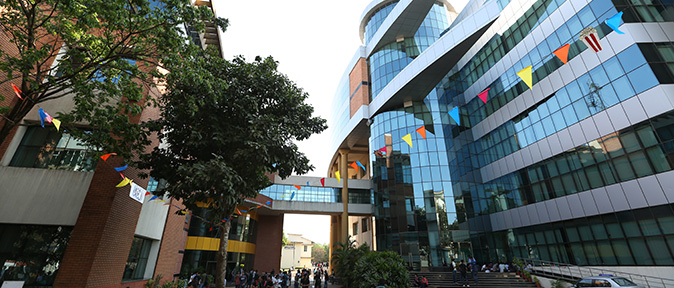
Innovation Centre
State-of-the-art Innovation Centre to facilitate multi-disciplinary research
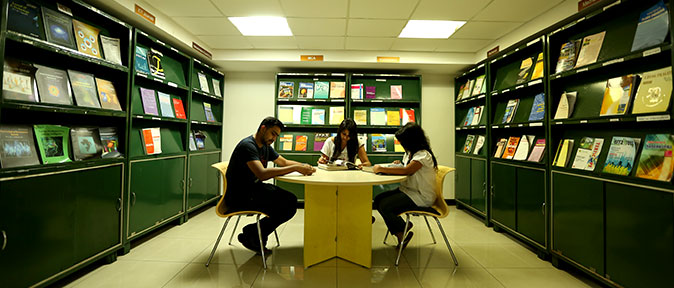
Libraries
Libraries have excellent resources for reference and study
MUTBI
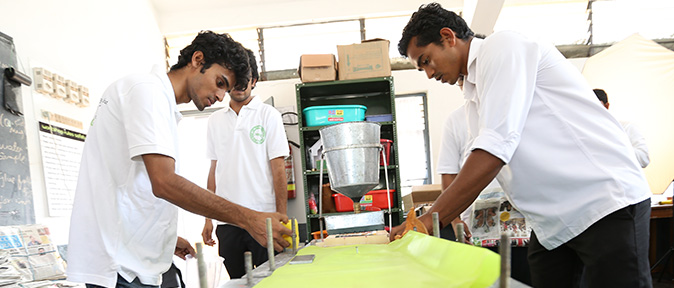
Paper tree - A green initiative by MIT students of MUTBI

Computing Facility
Wi-fi campus with modern computing and digital facilities